

TL;DR
In 2026, Agentic AI has moved far beyond copilots. While copilots help with single tasks, agentic AI autonomously plans and executes entire multi-step workflows – delivering significantly higher business impact.
Key Takeaways from 2026 Enterprise Deployments:
- Agentic AI achieves 171% average ROI (up to 192% in the US) and often reduces workload by 50%+.
- Real results: Major companies like Dow, Eneco, and Gujarat-based manufacturers are saving millions and boosting productivity.
- Top frameworks: LangGraph (best for production) and CrewAI (fastest for multi-agent teams).
- Governance is critical — especially under the EU AI Act (high-risk rules apply from August 2026).
Bottom Line: Copilots accelerate individuals. Agentic AI transforms operations. Companies that successfully combine both with proper governance are seeing the biggest wins.
Hey there, if you’re leading a team in the US, Europe, or even scaling an SME in India in 2026, you’ve probably noticed the AI tool shift. Last year, everyone was raving about Copilot (“AI that helps you write emails faster!”). Now? The conversation has completely changed to agentic AI, systems that don’t just assist… they own entire workflows from start to finish.
I’ve spent the last few months digging into real 2026 deployments (not vendor slides, not hype decks) with clients and partners across tech, manufacturing, finance, and retail. The numbers are finally in, and they’re eye-opening.
Today, I’m giving you the full picture of Agentic AI vs Copilots, which covers
- What actually works in production
- Real enterprise results with names and numbers
- A head-to-head comparison
- Frameworks benchmarked
- A step-by-step build guide
- Governance checklists
- Cost/ROI breakdowns in USD
- Common failures (and how to avoid them), and the 2026–2027 roadmap.
Whether you’re in the US, Europe, or scaling an SME in India, this is the practical guide you need right now. Let’s dive in.
Why Agentic AI Moved from Hype to Production in 2026
Remember 2025? Agentic AI was mostly pilots and PowerPoint dreams. What changed this year?
Three big things matured at once:
Better reasoning + self-verification loops – Models now catch their own errors mid-workflow instead of cascading failures.
Standardized tool integration – Protocols like Anthropic’s Model Context Protocol (MCP) became the “USB-C for agents,” making it dead simple to connect agents to real enterprise systems (CRMs, ERPs, databases).
Production-grade frameworks and observability – LangGraph, CrewAI, and AutoGen hit maturity, with built-in human-in-the-loop, audit logs, and state management.
Gartner predicted that 40% of enterprise applications will feature task-specific AI agents by the end of 2026 (up from <5% in 2025).
McKinsey’s latest State of AI report shows early scaled deployments delivering 3–5% annual productivity gains, with multi-agent systems pushing toward 10%+ enterprise-wide growth.
The hype is over. Agentic AI is now in production – and the ROI data proves it.
Let’s Get the Difference Straight (No Jargon Overload)
Copilots (think Microsoft 365 Copilot, GitHub Copilot, or similar) are reactive assistants. You prompt them, they help with one task at a time — draft an email, summarize a meeting, suggest code. They stop when you stop. Great for boosting individual productivity, but you’re still the boss of every step.
Agentic AI (or autonomous agents) are goal-oriented systems. Give them an objective (“handle this week’s customer refunds” or “analyze our shipping invoices and flag overcharges”), and they plan, reason, use tools, interact with other systems, and keep going until the job is done — or they need human escalation. They can even coordinate with other agents in multi-agent teams.
Agentic AI vs Copilots: Side-by-Side Reality Check (2026 Edition)
Here’s the no-BS comparison based on actual enterprise deployments:
| Aspect | Copilots (Reactive Assistants) | Agentic AI (Autonomous Agents) | 2026 Real-World Impact |
| Autonomy | Low – waits for your prompt every step | High – plans, reasons, executes end-to-end | Agents complete 70–90% of workflows unsupervised |
| Scope | Single tasks (email, code snippet, summary) | Multi-step processes + decisions | 3–10x more output per workflow |
| Human Role | Constant orchestrator | Supervisor (exceptions & approvals only) | Frees 40–60 minutes/day per knowledge worker |
| Cost Structure | $20–60/user/month (seat-based) | $0.50–$5 per completed task (or $2k–$25k/mo infra) | Agents deliver 171% avg ROI (192% in US) |
| Risk Level | Low–Medium | High (EU AI Act “high-risk” if decision-making) | Needs governance from day one |
| Best For | Individual productivity | Operational scaling & repetitive processes | Higher business value in support, finance, ops |
(Data synthesized from Gartner, McKinsey, and real 2026 deployments.)
Bottom line: Copilots are fantastic for acceleration. Agentic AI is for transformation. Most winning companies now run both — copilots for people, agents for processes.
Real Enterprise Results from 2026 Deployments
This isn’t theory anymore. Here are concrete examples from companies that went live in late 2025/early 2026:
1. Dow (Global chemicals leader) built autonomous agents in Microsoft Copilot Studio to process 100,000+ shipping invoices yearly. The agents scan PDFs, detect billing errors, and surface them in a dashboard. A second “Freight Agent” lets humans query data in plain English. Result? Hidden losses solved in minutes instead of weeks/months — expected to save millions of dollars in the first year alone.
2. Eneco (Sustainable energy provider, Belgium – 1.5M customers) replaced an underperforming chatbot with a multilingual agentic system. It now handles 24,000 chats per month (140% increase) and resolves 70% more conversations without handing off to a human. Escalations come with AI-generated summaries. Classic shift from reactive copilot to proactive agent.
3. BDO Colombia (Professional services firm) Deployed “BeTic 2.0” – an agent that automates payroll and finance processes. Outcomes: 50% reduction in operational workload, 78% of internal processes optimized, and 99.9% accuracy on managed requests. Employees now focus on higher-value client work instead of admin drudgery.
4. Atomicwork (IT service management) created “Atom”, an AI agent that automates employee service requests. Achieved 65% deflection rate (rising toward 80%) and 75% reduction in response latency, with 20% higher accuracy than previous solutions. Integrated directly into Teams.
5. Global payments organization (via Ciklum) rolled out agentic systems for customer support. Cut operational workload by nearly 50%. The big lesson? Leadership shifted from micromanaging interactions to setting boundaries and accountability.
(Data synthesized from Microsoft and Ciklum)
Broader stats back this up: Enterprises using agentic AI report an average 171% ROI (192% in the US), with leading adopters hitting 2.3–2.84x returns in the first 13 months. That’s roughly 3x better than traditional automation. Early deployments deliver 3–5% annual productivity gains; scaled multi-agent systems push toward 10%+ enterprise-wide growth.
Copilots still shine for individual tasks (5–15% quality/consistency gains), but they rarely move the needle on end-to-end processes the way agents do.
Useful Read: How AI Is Transforming Business Operations in 2026
When Copilots Win vs When Agentic AI Wins in 2026
Stick with (or start with) Copilots if:
- Your team is still getting comfortable with AI
- You need quick wins in content, coding, or analysis
- Budget or governance maturity is low
Go Agentic when:
- You have repetitive, multi-step workflows (support tickets, invoice processing, supply-chain checks, sales follow-ups)
- You want to scale without hiring proportionally
- You’re ready for governance (more on that below)
Many companies are doing both: Copilots for people + agents for processes.
Top Agentic AI Frameworks Benchmarked (April 2026)
Here’s the latest head-to-head from 2026 benchmarks:
- LangGraph (LangChain ecosystem) → Winner for production. Stateful graphs, durable execution, human-in-the-loop, excellent observability. Best for complex, long-running workflows. GitHub stars: ~20k+.
- CrewAI → Best for role-based multi-agent teams. Fastest setup, intuitive “hire your team” metaphor. Raised $18M and used by nearly half of the Fortune 500. Great for SMEs.
- AutoGen (Microsoft) → Excellent for conversational multi-agent collaboration. Strong .NET support and no-code Studio option. Recently merged elements with Semantic Kernel.
- New 2026 players to watch: OpenAgents (financial tasks), Mastra, DeerFlow, Pydantic AI, and Semantic Kernel updates.
Quick verdict: Start with CrewAI if you want speed. Move to LangGraph for production reliability and auditability.
Step-by-Step: Build a Secure Multi-Agent Team (2026 Tutorial)
Let’s make this real. Here’s how to build a simple 3-agent research + reporting team using LangGraph + CrewAI (open-source, runs under $500/month).
Step 1: Set up environment (Python 3.11+)

Step 2: Define your agents (CrewAI example)
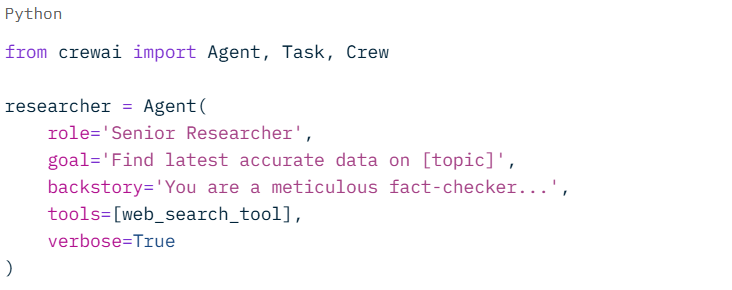
Step 3: Build the graph in LangGraph for orchestration + memory + human approval.
Step 4: Add security – tool permissions, rate limits, audit logging, and “human-in-the-loop” checkpoints.
Governance & Compliance Checklist (EU AI Act + US + Global)
Agentic systems are higher-risk under the EU AI Act (full high-risk rules kicking in August 2026). You need documented risk management, human oversight, logging, and transparency. US state laws and India’s DPDP Act also demand attention around data privacy and bias.
Practical 2026 Checklist:
- Risk classification (Annex III)
- Risk management system (Article 9)
- Data governance & quality (Article 10)
- Technical documentation & automatic logging (Articles 11–12)
- Human oversight & transparency (Articles 13–14)
- Cybersecurity & conformity assessment
- US state laws (Colorado high-risk rules effective June 2026) + DPDP in India
Practical tip: Build in guardrails from day one – escalation paths, audit logs, and clear “when to call a human” rules. The enterprises getting the best results treat governance as a feature, not a checkbox.
Cost & ROI Breakdown (Cloud vs Local Setups – 2026)
Typical Costs:
- Cloud (AWS Bedrock / Azure): $2k–$25k/month for production multi-agent team (usage-based).
- Local / On-prem (self-hosted Llama/Mistral on NVIDIA): Breakeven in under 4 months. Up to 8–18x cheaper per million tokens vs proprietary APIs.
- Development: $15k–$80k for MVP, $150k–$300k+ for enterprise-grade.
Real ROI (2026 data): Average 171% (192% in the US). Leading deployments hit 2.3–2.84x returns in 13 months. Many see 50% workload reduction and $77M+ profit impact.
Common Failures & How to Fix Them (Real Deployments)
The dark side: Gartner predicts over 40% of agentic AI projects will be canceled by the end of 2027 due to:
- Poor data quality/legacy integration
- Cascading failures & hallucinations
- Lack of observability & governance
- Unclear business value / escalating costs
Mitigation playbook: Start narrow, add memory + verification loops, implement observability (LangSmith/Langfuse), and have strong human escalation paths.
The 2026–2027 Roadmap
Gartner predicts 40% of enterprise apps will embed task-specific agents by end of 2026 (up from <5% in 2025). Multi-agent systems (teams of specialized agents) are the next leap.
By 2027, multi-agent ecosystems will become standard; 15% of daily decisions will be autonomous.
Moreover, it is predicted that in 2028 and beyond, Agentic AI + physical robotics will be in trend.
We’re moving from “AI that helps” to “AI that operates.” The winners will be companies that redesign workflows around agents instead of bolting them onto old processes.
The winners redesign workflows around agents instead of bolting them onto old processes.
Ready to Get Started with Agentic AI?
Turning these insights into real business impact takes the right partner — one who understands both the technology and the practical challenges of enterprises and SMEs.
At Calidad Techno Lab, we help enterprises and SMEs build production-ready agentic AI systems, intelligent copilots, custom AI solutions, and compliant AI platforms.
Whether you need strategy workshops, full development, integration with your existing systems, or governance frameworks — our team delivers secure, scalable solutions with measurable ROI.
Ready to build your agentic advantage? Explore our AI Solution Services or connect with AI experts today. We work with clients across the US, Europe, and India – with flexible delivery models that match your budget and timeline.
FAQ – Agentic AI vs Copilots in 2026
Q1: What is the main difference between Agentic AI and Copilots?
Copilots are reactive assistants that help with single tasks like drafting emails or summarizing documents — you control every step.
Agentic AI is autonomous: you give it a goal, and it plans, executes, and completes entire multi-step workflows with minimal supervision.
In 2026, most companies use both – copilots for personal productivity and agentic AI for operational automation.
Q2: Which is better for enterprises and SMEs in 2026 – Agentic AI or Copilots?
Copilots are easier to start with and great for individual productivity.
Agentic AI delivers higher ROI for repetitive, multi-step processes like invoice handling, support triage, and supply chain tasks.
For SMEs, we recommend starting small with lightweight agents. Enterprises benefit most from combining both with proper governance.
Q3: What are the best frameworks for building Agentic AI in 2026?
The top frameworks right now are LangGraph (best for production and complex workflows), CrewAI (fastest for multi-agent teams), and AutoGen (strong for conversational agents).
Most teams begin with CrewAI for quick prototyping and switch to LangGraph for secure, scalable deployments.
Q4: How much ROI can I realistically expect from Agentic AI in 2026?
Real 2026 deployments show an average ROI of 171% (192% in the US), with many achieving 50% workload reduction and 2–3x returns within the first year.
Costs range from $2k–$25k/month for cloud setups, while local deployment can break even faster.
Q5: Does the EU AI Act apply to Agentic AI, and how do I stay compliant?
Yes, many agentic systems are considered high-risk under the EU AI Act (rules fully apply from August 2026).
You need risk management, human oversight, logging, and clear documentation.
At Calidad Techno Lab, we help enterprises and SMEs build compliant agentic AI solutions that meet EU, US, and DPDP requirements from day one.
The Calidad Technolab Editorial Team publishes expert insights on AI technologies, software development, and digital innovation to help businesses understand and adopt modern technology solutions.